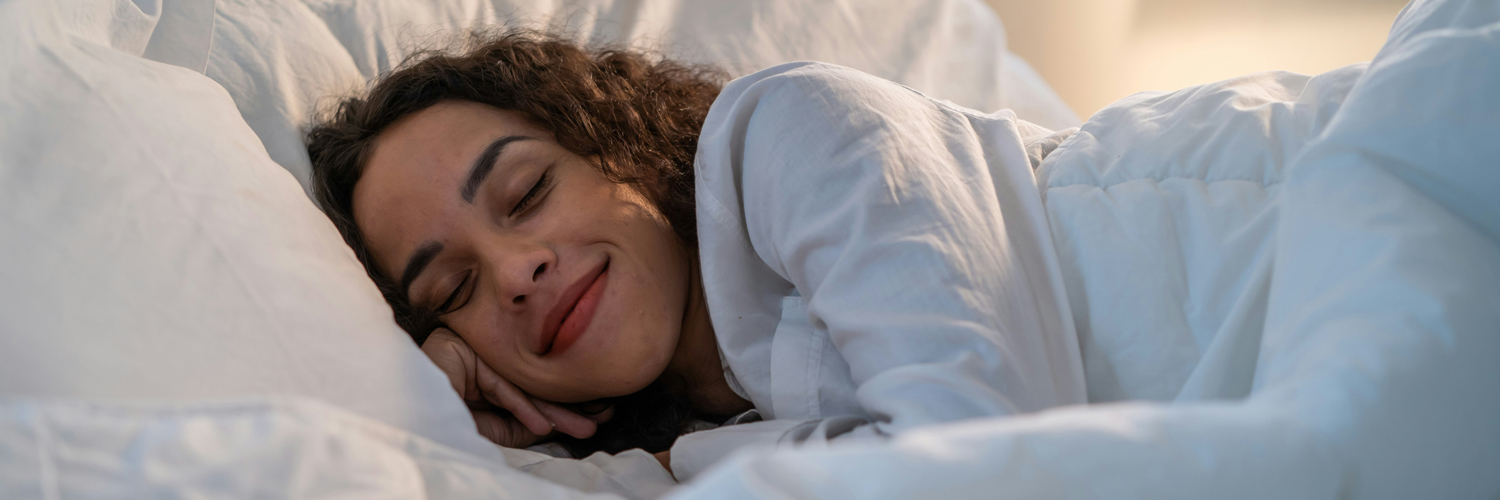
As humans, we spend roughly one third of our lifetimes sleeping. It’s an essential part of keeping our bodies healthy—sleep allows our bodies to rest and repair, which keeps our immune systems strong, gives our brains the chance to integrate memories, and allows us to regulate our emotions. Knowing how necessary sleep is for us, making sure you get a good night’s sleep is essential, and your HVAC can play an important role by keeping your home at an optimal sleeping temperature and humidity level.
How Temperature & Humidity Affect Your Sleep
You might be thinking, “Humans sleep in all different types of temperatures and climates, so how can there be an ‘optimal’ sleeping temperature and humidity level?” The truth is that excess heat, cold, dampness, and dryness can disrupt our sleep and lead to discomfort, sleep deprivation, and even illness.
When your bedroom is too warm – Your body isn’t able to regulate its core temperature as well in the heat, meaning you’re more likely to wake up more frequently during the night. You’re also more likely to have less rapid eye movement (REM) sleep, which helps with cognitive functioning, and less slow-wave (deep) sleep, which strengthens your memory, immune system, muscle repair, and also helps you feel energized when you wake up.
When your bedroom is too cold – Extremely cold temperatures make your heart work harder to keep your blood pumping, which can be dangerous if you have underlying heart conditions. However, with items like blankets, comforters, and pajamas, it’s easy to stay properly warm while sleeping so that this doesn’t become an issue.
Excess humidity in the air – Humid air makes it harder for sweat to evaporate, which can make you feel even warmer and lead to discomfort and restlessness while trying to sleep. Dampness in the air can also cause the growth of mold and allergens, which can cause congestion, trigger asthma symptoms, and cause respiratory infections.
When there isn’t enough moisture in the air – In low-humidity conditions, your nose and throat can dry out more easily and irritate your sinuses, which can lead to snoring, respiratory infections, or more intense sleep apnea symptoms. Low humidity can also dry out your skin and cause itchiness, which can make it difficult to sleep deeply.
The Best Temperature for Sleep
Most experts say that the optimal sleeping temperature for adults is between 60° and 67°. This works with your body’s natural temperature fluctuations, where your body temperature slowly drops throughout the evening to signal to your body that it’s time to rest, then rises again right before you wake up.
To keep your bedroom at this optimal temperature, set your thermostat to kick down to that 60°–67° range while you sleep. If you’re used to sleeping at a warmer temperature, ease your way into the cold by lowering your thermostat by 2–3° each day until you find your ideal number.
You can use pillows, sheets, duvets, and mattress toppers that are designed to keep you cool to get deeper sleep. If you have a Wi-Fi or smart thermostat, you can also create a specific schedule that gradually drops the temperature in your home until it reaches your set sleep temperature, then gradually increases the temperature as you wake up.
The Best Humidity Level for Sleep
For humidity, experts say to keep levels between 30% and 50%, with the ideal level being between 40% and 45%. This range keeps your body comfortable and prevents allergens from developing in the air, helping you fall asleep and stay asleep throughout the night.
It can be harder to keep your humidity level stable throughout your home, since it naturally fluctuates throughout the year—rising to over 50% in the summer when it’s muggy outside and under 30% in the winter when it’s bone-dry—which is where humidifiers and dehumidifiers come into play. If your bedroom is relatively small, a portable humidifier or dehumidifier might effectively bring the levels back into that ideal range. If you’re trying to manage the humidity levels in multiple bedrooms, however, you can consider installing a whole-home humidifier or a whole-home dehumidifier.
How Else Your HVAC Can Help
Making sure that your HVAC system is in good working order can help you keep your home at the optimal sleeping temperature and humidity level. Scheduling an HVAC professional to give your equipment a tune-up and clean out any return vents, ducts, and your air filter will help your system cool your home and manage humidity more efficiently.
If your current HVAC system is over 10 years old or has a difficult time cooling your bedroom down to your set sleeping temperature, it’s probably time for an upgrade. Talk to us about the latest HVAC systems available, and take advantage of our October offer of $1,000 off any new high-efficiency furnace or air conditioner!
Your sleep is an essential part of your overall health and well-being. In addition to everything you’re doing on your own to get good sleep (like going to bed at a reasonable time, avoiding blue light a couple of hours before bed, etc.), make sure your home is doing all it can to support you, too. If you want to learn more about how your current HVAC system can help you sleep better at night, just give us a call!