It’s hard to imagine a world without heating and air conditioning, even though the equipment we’re so used to now has evolved a lot over the course of human history. So, how exactly did we come to harness the heat and the cold for our own personal use?
The story of how the HVAC industry came to be is one of innovation and determination. Below is a (shortened) timeline highlighting some key moments in history that led us to where we are today—a world where we can argue year-round about whether to set the thermostat at 70 or 71 degrees. As a quick note, because Appel is based in Indiana, USA, we’ve tailored the timeline to be a bit more America-centric—but that doesn’t take away from all the great contributions to the HVAC industry from around the world!
The History of Home Heating
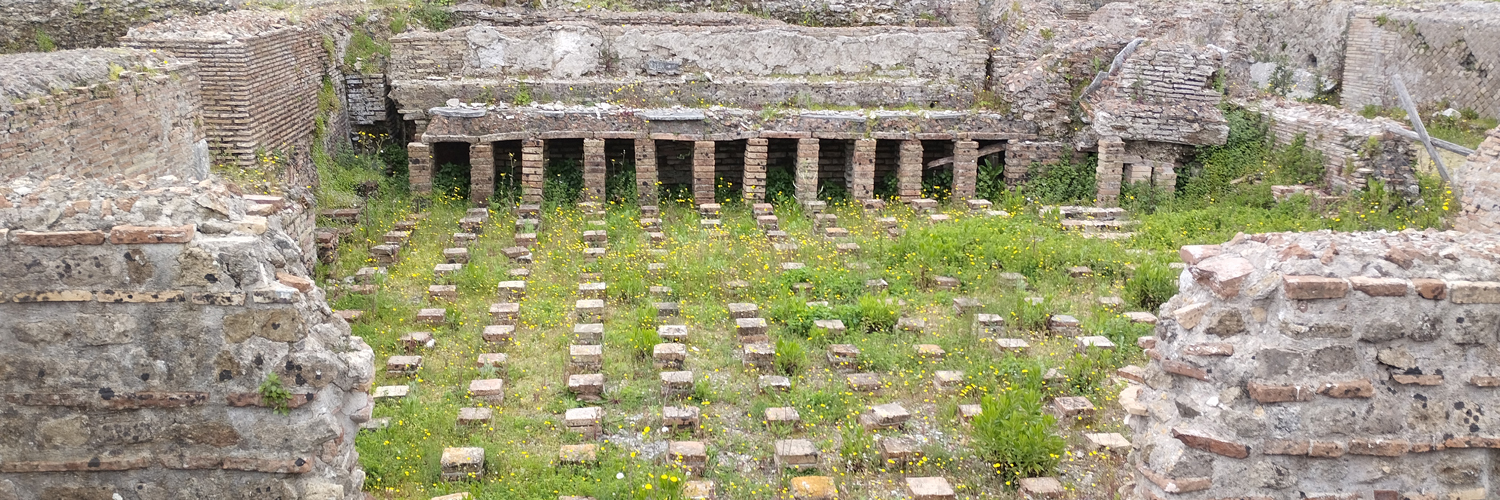
1200 B.C.–80 B.C. – Long before furnaces, ancient kingdoms still found ways to keep warm. King Arzawa in Turkey used a system of underfloor radiant panel heating to heat his palace, while the ancient Romans used a hypocaust system—they hollowed out space underneath their floors to allow heat from fires to warm the upper-class Roman homes and bathhouses.
1200 – Cistercian monks in Europe used wood-burning furnaces and the nearby river to create a central heating system in their monastery.
1624 – French architect Louis Savot designed a fireplace with both a grate and a jacket that allowed air to circulate around the fire and disperse the heated air into the rest of the room.
1831 – Angier Perkins, an English inventor, patented a steam heating system that circulated high pressure, high temperature water through small pipes. This system was then adopted and installed in homes across England, including the home of the Governor of the Bank of England, who wanted the heat to grow grapes during the English winters.
1835 – One of the first central heating air furnaces was manufactured in Worcester, Massachusetts. This furnace used gravity to distribute hot air through ducts throughout the home.
1837 – Richardson & Boynton Co. began mass-producing furnaces in the US. Before then, furnaces were built locally for each specific building.
1855 – Peter von Rittinger, an Austrian scientist, invented the first heat pump, where the heat from the outdoors was moved inside to warm a building and the heat from the indoors was moved outdoors to provide air conditioning.
1893 – At the Chicago World’s Fair, oil-fired boilers, which were easier to use and more efficient than coal-fired ones, were displayed and used to heat buildings at the exposition.
1917 – Gas-fired boilers, which were cheaper to operate than even oil-burned boilers, began to increase in popularity.
1925 – American engineer Reuben Trane, the founder of The Trane Company, successfully developed a convector radiator, which was lighter and easier to install than other radiators, more efficient, and less expensive.
1928 – Peter von Rittinger’s heat pump was first used in Geneva, Switzerland. Afterwards, the Swiss began to mass produce heat pumps.
1945 – Robert C. Webber, a US inventor, created a ground-source heat pump system, which became popular in America during the oil crisis in the 1970s.
2001 – Variable-capacity heat pumps, which save energy by continuously running and adjusting capacity as needed, became commercially available in the US by Mitsubishi Electric.
The History of Air Conditioning
2600 B.C.–266 C.E. – Ancient Egyptian architects included natural ventilation in their building designs to help keep cool, while the Romans developed aqueducts to move cool water around the walls of their buildings.
747 – Water-powered fan wheels created an early system of air conditioning at the Cool Hall in the Imperial Palace in China.
1736 – Dr. John Desaguliers, a British engineer, designed a hand-powered fanning wheel that helped better circulate and ventilate the air in the House of Commons.
1748 – Scottish physician and professor William Cullen had the first demonstration of artificial refrigeration, showing the cooling effects of evaporating a liquid into gas.
1842 – Dr. John Gorrie, an American physician, discovered the cold-air process of refrigeration and used it to build an air-cooling machine designed to treat yellow-fever patients. He received a patent for mechanical refrigeration in 1851.
1902 – American engineer Willis Carrier invented what is considered the first modern air conditioning system that controlled both the temperature and humidity for a Brooklyn-based publishing company.
1904 – The Missouri State Building was cooled using mechanical refrigeration during the St. Louis World’s Fair, which helped introduce the concept of cooling buildings to the general public.
1906 – The Frank Lloyd Wright Larkin Administration Building in Chicago was the first office building designed to include an air conditioning system.
1922 – Willis Carrier developed the centrifugal chiller, which helped cool air using fewer moving parts and steps in the process, which helped make air conditioners more efficient, safe, and affordable.
1928 – American engineers Thomas Midgley, Albert Henne, and Robert Mcnary invented a replacement refrigerant for the toxic gases that had previously been used in air conditioners: chlorofluorocarbon (CFC) refrigerants. Although CFCs are safer for humans, they have also been damaging the ozone layer for decades.
1932 – The first window unit air conditioners became publicly available for purchase, based on the invention by H.H. Schultz and J.Q. Sherman.
1936 – Albert Henne invented refrigerant R-134a, a hydrofluorocarbon (HFC), as an alternative to the ozone-depleting CFCs he helped invent. While hydrofluorocarbons don’t deplete the ozone, they are still a greenhouse gas.
1938 – The largest air conditioning system in the world was installed in the Senate Office Building, Old and New House Office Buildings at the U.S. Capitol.
1947 – Compact and affordable window air conditioning units are invented by American engineer Henry Galson.
1969 – Over half of all new cars produced are equipped with air conditioning.
1975–1978 – The first heat pump design model that used steady-state vapor-compression was developed by the Oak Ridge National Laboratory, which made air conditioners more energy efficient and affordable.
1990–1992 – The US government amended the Clean Air Act and set standards for air conditioners and heat pumps to make cooling and heating technology more efficient and environmentally friendly. These changes also focused on phasing out the use of CFCs.
2006 – The Energy Department sets new standards for air conditioners and heat pumps to help reduce carbon dioxide and greenhouse gas emissions.
2015 – The Energy Department began attempts to create air conditioning technology that doesn’t require the use of refrigerants through non-vapor compression technology.
It’s incredible to see just how much heating and cooling technology has advanced over the last 200 years, and who knows just what the future will hold! But for the here and now, Appel works with the industry’s best and most energy-efficient heating and cooling equipment. So, no matter what you need for your HVAC system—a tune-up, repair, or new equipment—just give us a call and we’ve got you covered (no ancient Egyptian or Roman techniques required)!